Daily Diary of Six Month Industrial Training
I am doing six Month Internship at "WEB GLOBAL IT SOLUTION".
Whatever I am doing in the training, I briefly explaining here as the Daily diary.
The first week: From 20th Jan 2020 to 27th Jan 2020.
On the first day, I came to know about the company rules and regulations and the staff members give me an introduction about the company like in which of the fields they are working on.
After that, my trainer Mr.Parveen Kumar Singh introduced me to the Course Contents of my Training like what are the modules on which I will be working on.
I started with "JAVA" on 21th Jan by understanding basic concepts some basic program likes.
1 .java program add two number.
2.check even odd.
3.factorial.
understanding of the concept of lopping in java.
"pattern printing"
On 22th Jan, the introduction of IDE used in the company
Eclipse,
NetBeans.
sir recommended using Eclipse.
On 23rd Jan,
start Array.
do some programming on array so easily understand the concept of an array.
like program to
Create a class Book with below attributes:id - int
title - String
author - String
price - double
Write getters, setters, and parameterized constructors as required.
Create class Solution with main method.
Implement static method - sortBooksByPrice in Solution class.
This method will take a parameter as an array of Book objects.
It will return an array of books which is sorted in ascending order of book price. Assume that no two books will have the same price.
This method should be called from the main method and display values of returned objects as shared in the sample.
Before calling this method, use Scanner object to read values for four Book objects referring attributes in the above sequence.
Next, call the method and display the result.
Consider below sample input and output:
Input:
1
hello
writer1
50
2
cup
writer2
55
3
Planet
writer3
45
4
India
writer4
40
Output (each line has values separated by single space):
4 India writer4 40.0
3 Planet writer3 45.0
1 hello writer1 50.0
2 cup writer2 55.0
Like similar so many programs.
Second week: From 30 Jan 2020 to 5 Fab 2020.
on 5th Jan, I started revising of the concept of OOPs.
class
Inheritance.
Polymorphism.
Abstraction.
Polymorphism.
abstraction.
Encapsulation.
do some programming for cleaning concept of OOPs
like.
Sort Books by Price
Create a class Book with the below attributes:
id - int
title - String
author - String
price - double
Write getters, setters, and parameterized constructors.
Create class Solution with the main method.
Implement static method - sortBooksByPrice in Solution class.This method will take a parameter as an array of Book objects. It will return an array of books that are sorted in ascending order of book prices. Assume that no two books will have the same price.
This method should be called from the main method and display values of returned objects as shared in the sample.
Before calling this method, use Scanner object to read values for four Book objects referring attributes in the above sequence.
Next, call the method and display the result.
Consider below sample input and output:
Input:
1
hello
writer1
50
2
cup
writer2
55
3
Planet
writer3
45
4
India
writer4
40
From 5th Feb 2020 to 15th Fab, 2020
I started with the Concepts of Data Structure.
In the following week, I came to know about the basics Shorting Algorithm.
on 6th Feb I learned about Shorting algorithm programming
like
1 Quick Sort is a divide and conquers algorithm. It creates two empty arrays to hold elements less than the pivot value and elements greater than the pivot value, and then recursively sort the sub-arrays. There are two basic operations in the algorithm, swapping items in place and partitioning a section of the array
complexity
best n log n.
2. merge sort.
3. Bubble sort.
for(int i=0;i<ar.length;i++) {int flag=0;
for(int j=0;j<ar.length-1-i;j++) {
if(ar[j]<ar[j+1]) {
temp=ar[j];
ar[j]=ar[j+1];
ar[j+1]=temp;
flag=1;
}
}
if(flag==0) {
break;
}
}
4.Insersation sort
for(int i=1;i<ar.length;i++) {temp=ar[i];
j=i;
while(j>0 && ar[j-1]>temp) {
ar[j]=ar[j-1];
j=j-1;
}
ar[j]=temp;
}
From 15Feb Aug 2020 to 22 Feb 2020
On 15nt Feb, I started with the Java Collections Framework.
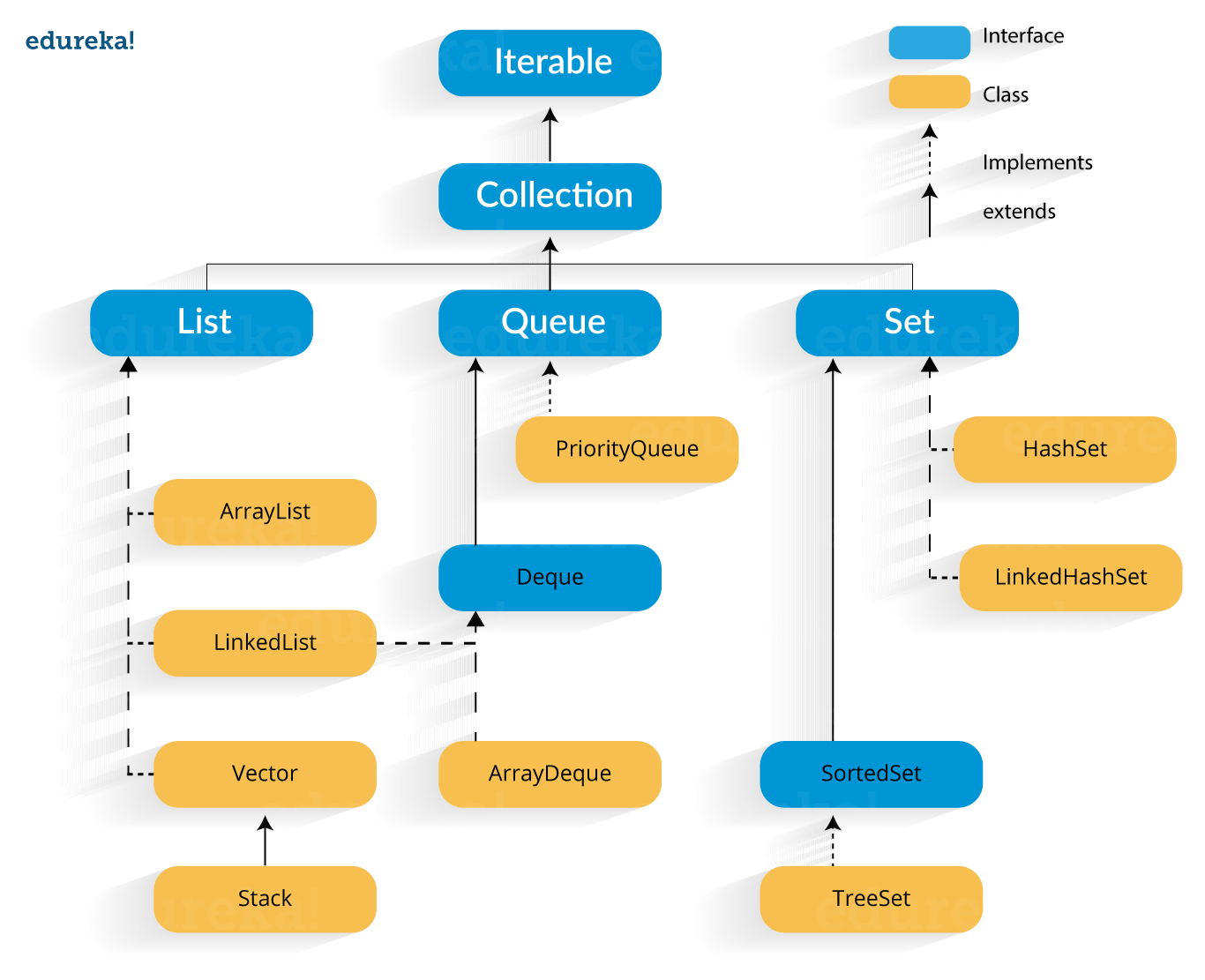
Java Collection Framework Hierarchy
As we have learned Java collection framework includes interfaces and classes. Now, let us see the Java collections framework hierarchy.
Started with List
- ArrayList
- LinkedList
- Vectors
ArrayList object = new ArrayList ();
Java Collections: Sets
19th Feb 2020
Started set
HashSet
Java HashSet class creates a collection that uses a hash table for storage. HashSet only contain unique elements and it inherits the AbstractSet class and implements Set interface. Also, it uses a mechanism hashing to store the elements.
Below are some of the methods of Java HashSet class:
Below are some of the methods of Java HashSet class:
22nd Feb 2020 to 29th Feb 2020
Started with Selenium.
Selenium Framework is a suite of automation testing tools that is based on the JavaScript framework. It could run the tests directly on the target browser, drive the interactions on the required web page, and rerun them without any manual input.
Selenium IDE
Selenium IDE is a Chrome and Firefox plugin, which is capable of logging natural interactions in the browser and generate its code in different programming languages. These programming languages include Java, Python, Ruby, C#, and Selenese.
Types of Selenium Frameworks
Selenium frameworks based on the functional approach are classified into three main types:
- Data-driven framework
- Keyword-driven framework
- Hybrid framework
Data-Driven Framework
The data-driven framework is based on the different data sets that are created into an external file (excel sheets) and imported into the automation testing tool. When the number of data sets that the test framework uses as input is on a higher side, it is very difficult to change these values in the script every time to conduct the test.
When to use these Selenium frameworks?
When there are a large number of data sets to be tested for the web application. Then you must opt for a data-driven framework, which separates them from the actual code.
How to get started with Selenium Framework?
To get started with the Selenium automation testing, you can go through BrowserStack’s Automate documentation. Decide which scripting language and framework you are planning to use for testing. And, then you can install the prerequisite components.
1st march to 15th March 2020
Started working A Real-time client project called logistics.
basically, this project is booking Track and commercial space online
Anybody moves there goods from one place to another easily just go to logistics sit and search places and book track and Wearhouse.
we provide lots of options. Different companies registered.
In this, we are working as Testing and checking All the client requirement full fill or not according to a given SRS document.
After the 15th march, we are back home.
Due to the covid-19 situation.
26th March to 5th April 2020
working from Home Started on the same project of Logistics.
5th April 2020 to 10 April 2020
Project
Stated Project name is called "fake news Detection using ML and NLP"
Researching Algorithm
7th April
learning some basic machine learning algorithm
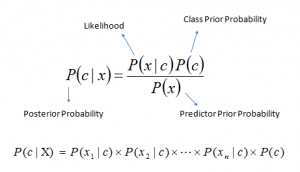
1.It is a classification technique based on Bayes’ Theorem with an assumption of independence among predictors. In simple terms, a Naive Bayes classifier assumes that the presence of a particular feature in a class is unrelated to the presence of any other feature.
Bayes theorem provides a way of calculating posterior probability P(c|x) from P(c), P(x) and P(x|c). Look at the equation below:

10th April 2020
2.SVM
The objective of the support vector machine algorithm is to find a hyperplane in an N-dimensional space(N — the number of features) that distinctly classifies the data points.

The objective of the support vector machine algorithm is to find a hyperplane in an N-dimensional space(N — the number of features) that distinctly classifies the data points.
12th April 2020
What is a Neural Network?
A neural network is a series of algorithms that endeavors to recognize underlying relationships in a set of data through a process that mimics the way the human brain operates. In this sense, neural networks refer to systems of neurons, either organic or artificial in nature. Neural networks can adapt to changing input; so the network generates the best possible result without needing to redesign the output criteria. The concept of neural networks, which has its roots in artificial intelligence, is swiftly gaining popularity in the development of trading systems.

15th April 2020
word2vec
word2vec is a well known concept, used to generate representation vectors out of words.
doc2vec
As said, the goal of doc2vec is to create a numeric representation of a document, regardless of its length. But unlike words, documents do not come in logical structures such as words, so the another method has to be found.

flow chart of project
.
20th April 2020
 |
| Start OpenCV |
installation the OpenCV 2.x
OpenCV is a library of programming functions mainly aimed at
real-time computer vision. The library is cross-platform and free for use under
the open-source BSD license. OpenCV is written in C++
and its primary interface is in C++, but it still
retains a less comprehensive though extensive older C interface.
After completion of OpenCV, be need to decide to choose the best algorithm for face recognition like
•Eigen faces
(1991)
•Local Binary
Patterns Histograms (LBPH) (1996)
•Fisherfaces (1997)
•Scale
Invariant Feature Transform (SIFT) (1999)
•Speed Up
Robust Features (SURF) (2006)
we choose Local Binary
Patterns Histograms (LBPH) (1996)
30th April 2020
Start study of Local Binary Patterns Histograms (LBPH) (1996)
Local Binary
Pattern (LBP) is a simple yet very efficient texture operator which labels the
pixels of an image by thresholding the neighborhood of each pixel and considers
the result as a binary number.
It was first
described in 1994 (LBP) and has since been found to be a powerful feature for texture classification. It has further been determined that when LBP is
combined with histograms of oriented gradients (HOG) descriptor, it improves
the detection performance considerably on some datasets.
Parameters:
the LBPH uses 4 parameters:
Radius: the
radius is used to build the circular local binary pattern and represents the
radius around the central pixel. It is usually set to 1.
Neighbors: the
number of sample points to build the circular local binary pattern. Keep in
mind: the more sample points you include, the higher the computational cost. It
is usually set to 8.
Grid X: the number of cells in the horizontal direction. The more cells, the finer the
grid, the higher the dimensionality of the resulting feature vector. It is
usually set to 8.
Grid Y: the
number of cells in the vertical direction. The more cells, the finer the grid,
the higher the dimensionality of the resulting feature vector. It is usually
set to 8.
10th May 2020
Training The Algorithm
First, we need
to train the algorithm. To do so, we need to use a dataset with the facial
images of the people we want to recognize.
We need to
also set an ID (it may be a number or the name of the person) for each image,
so the algorithm will use this information to recognize an input image and give
you an output.
Images of the
same person must have the same ID. With the training set already constructed,
let’s see the svm computational steps.
25th May 2020
Apply the all algorithm start to implementation
1st June 2020
Start to implementing the above Knowledge to complete the project.
15th June 2020
we complete the project 15th Nov 2019 with continuous evaluation and guidance of trainer